Natural History Museum Abu Dhabi

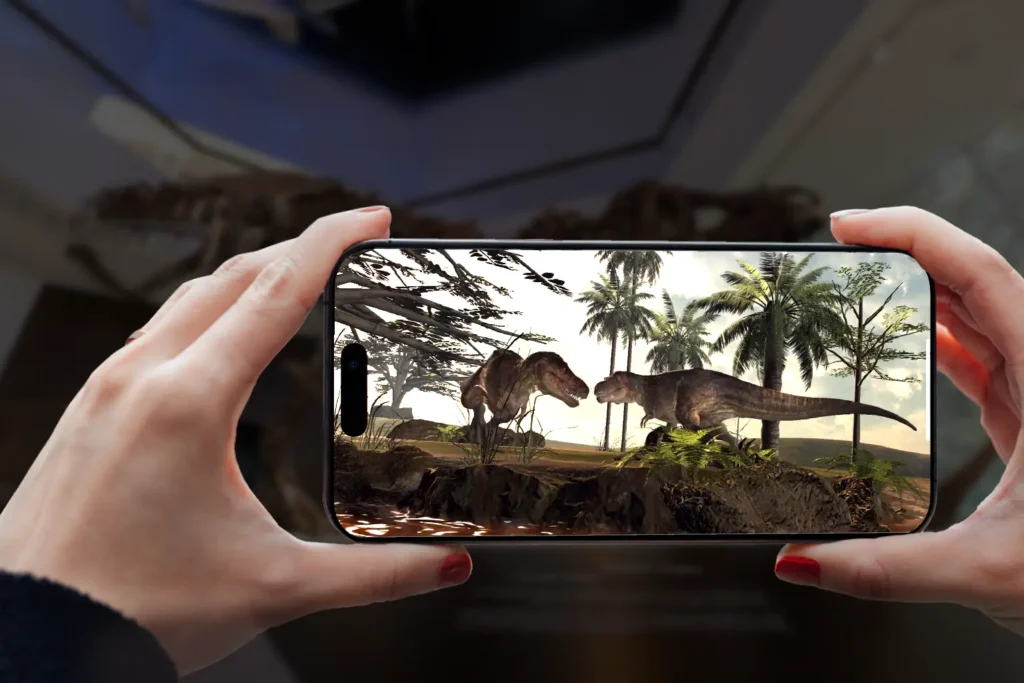
NHMAD Trex XR experience

AR/XR Experience Design & Production, in collaboration with NOUS Digital

NHMAD Trex XR experience

Services // IMMERSIVE // AR/XR

Overview

The Natural History Museum Abu Dhabi sits in the Saadiyat Cultural District, one of the most significant natural history institutions in the region, housing rare specimens and rare research. NOUS Digital was commissioned to build the museum’s mobile visitor experience: a full-featured app with AI companions, beacon-triggered content, and augmented reality, available on loan devices and personal phones.

Luzidlab was brought in to design and produce the AR component. Three experiences, each anchored to a specific space and specimen. We handled everything from script and storyboard through 3D modelling, animation, and sound design, as well as the spatial scanning of the museum using Immersal, and training the on-site team to maintain those scans as the installation evolved.

XR, not just AR

Most AR experiences place a digital object into the real world and stop there. We took a different approach.

Rather than floating a dinosaur in a white gallery space, we used each room’s physical architecture as a foundation and built entire natural environments around it: prehistoric jungle, ancient floodplain, open ocean. What the visitor sees through their device is not a creature in a museum; it is a world.

This is closer to extended reality than conventional AR: full volumetric environments, spatially anchored, running in real time on a mobile device. The architecture becomes the blueprint; the natural world fills the space.

The experiences

Trexs

T-Rex: Stan

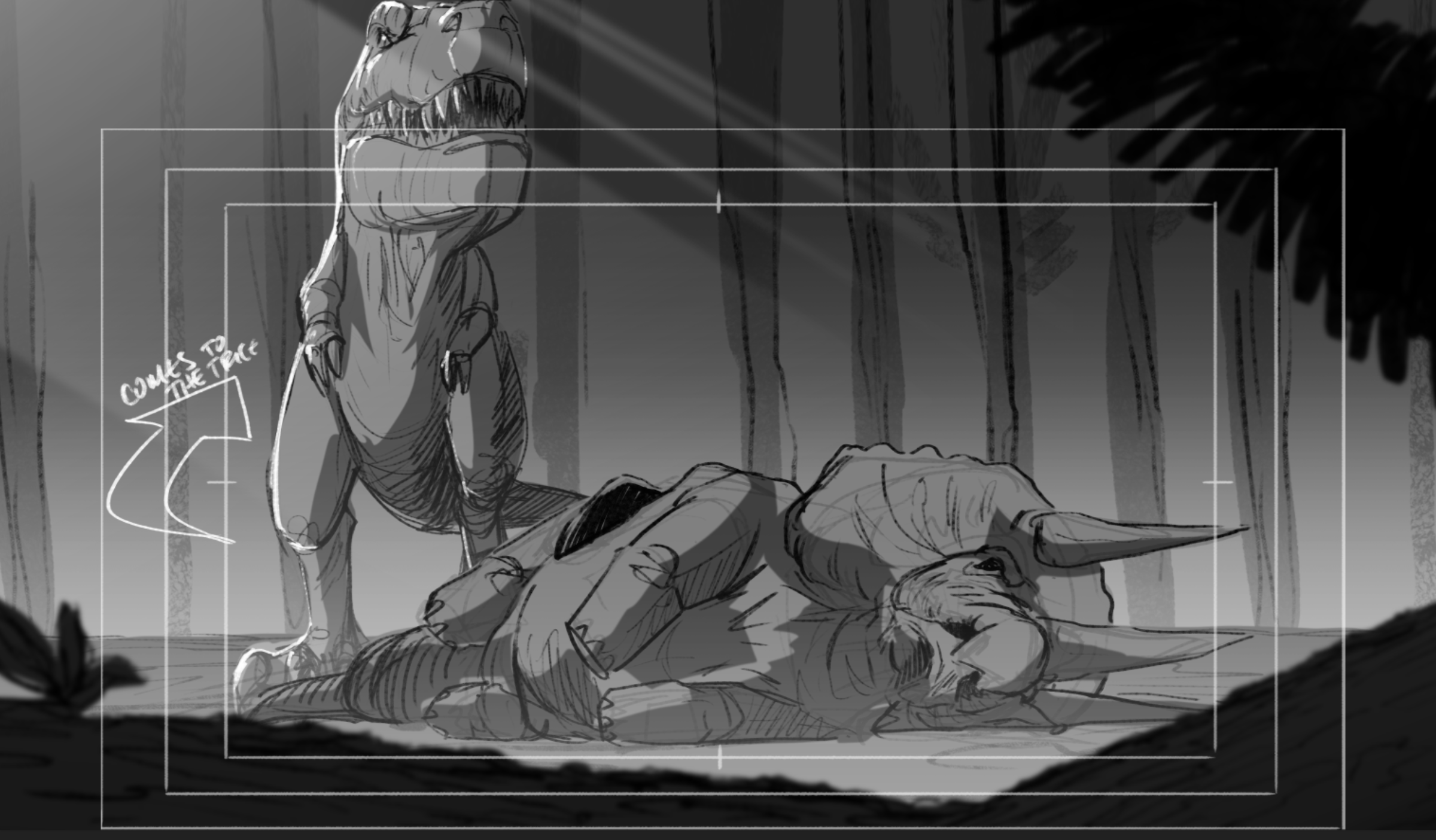
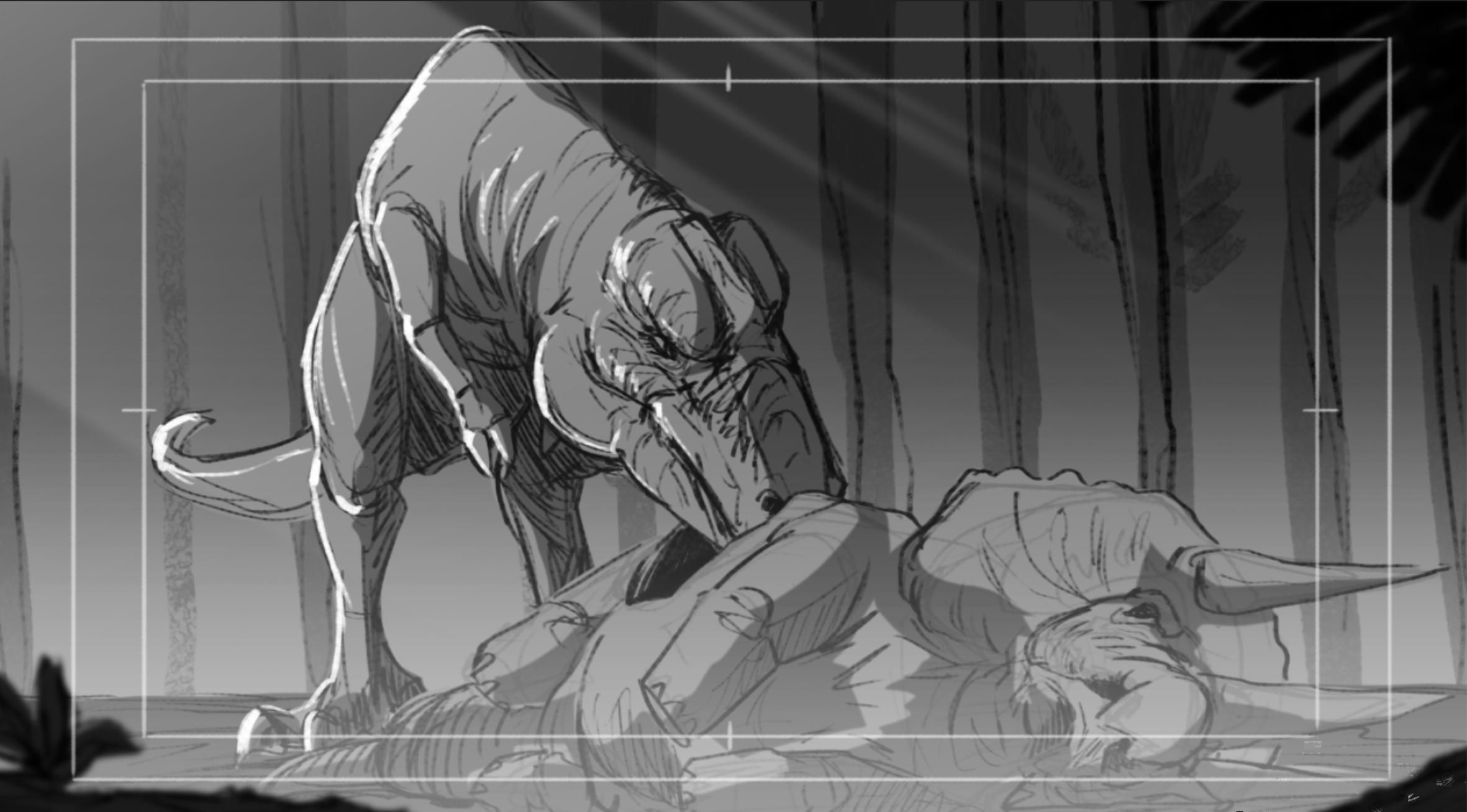
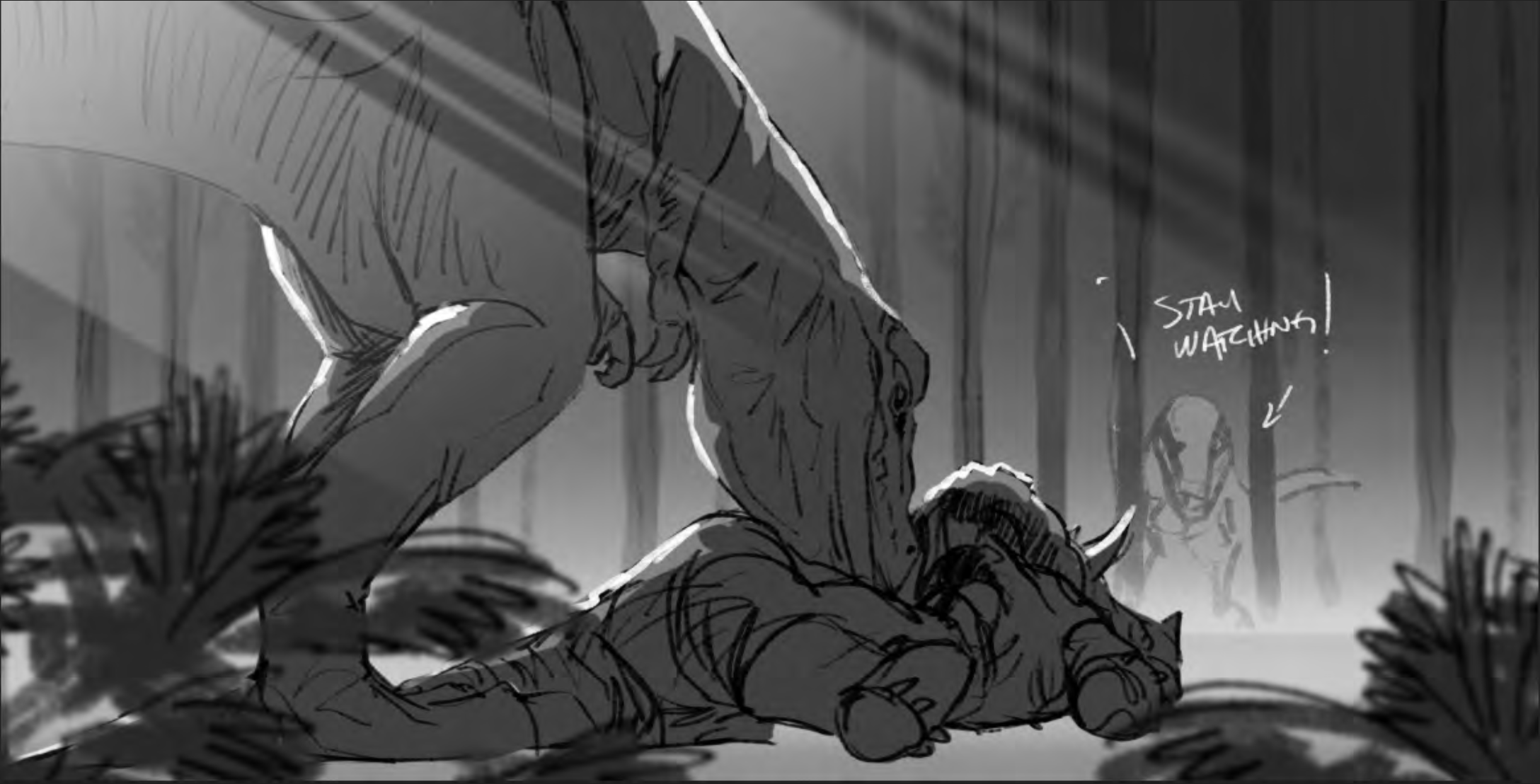
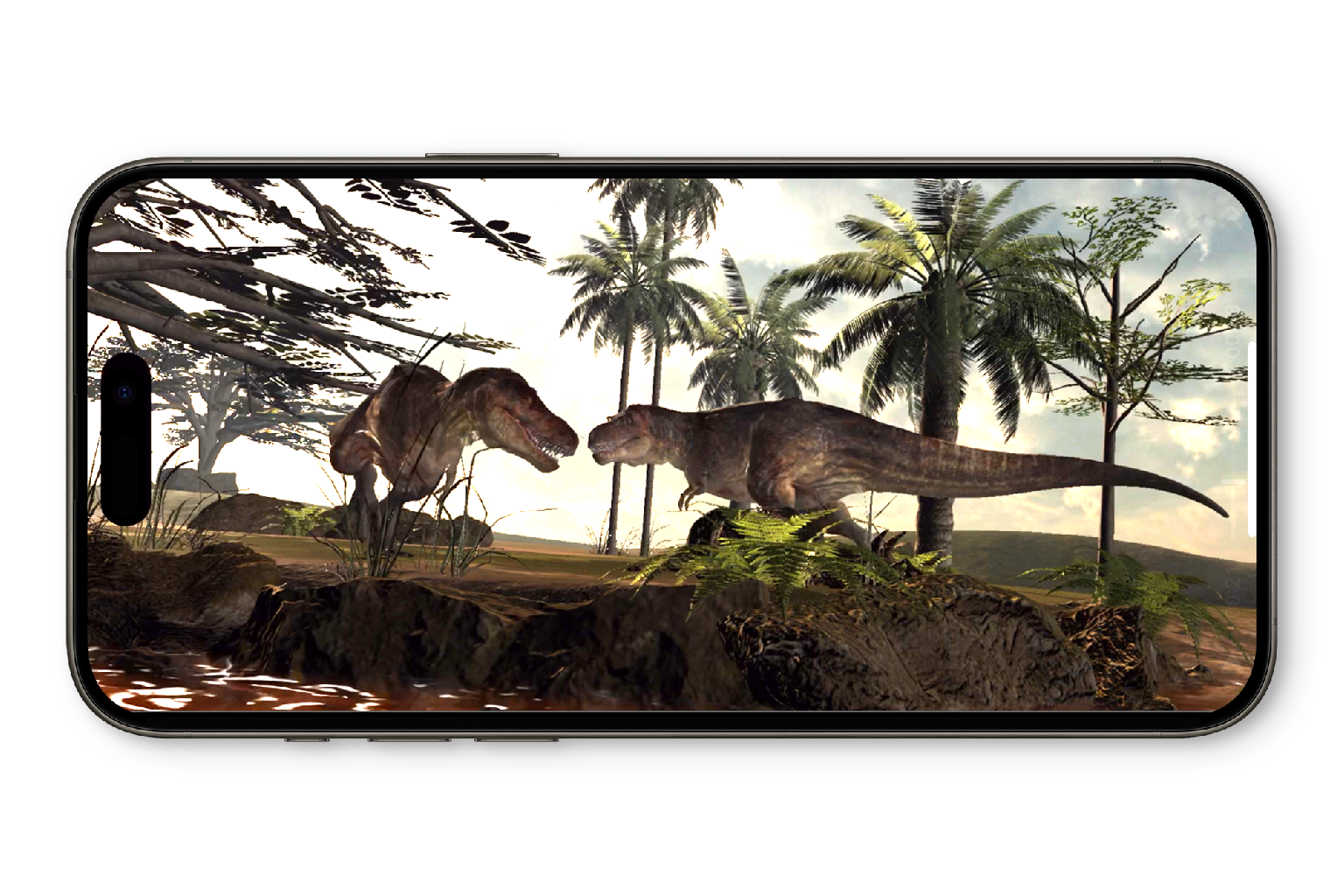
The museum's centrepiece is Stan, one of the most complete T-Rex skeletons ever found. Visitors point their device at the real fossil to activate the scene: two Tyrannosaurus rex locked in a fight over the cadaver of a Triceratops. The carcass was built from 3D scans of the actual Triceratops skeleton on display in the exhibition, so visitors are standing beside the real bones while watching the story of how they may have ended up there.

T-Rex skin is, by definition, speculative. There is no direct reference. We worked closely with the museum's scientific team throughout. Every decision on scale patterns, colouration, and surface detail is based on the best available evidence. The result is not a movie monster. It is an animal.
Blue whale

Blue Whale

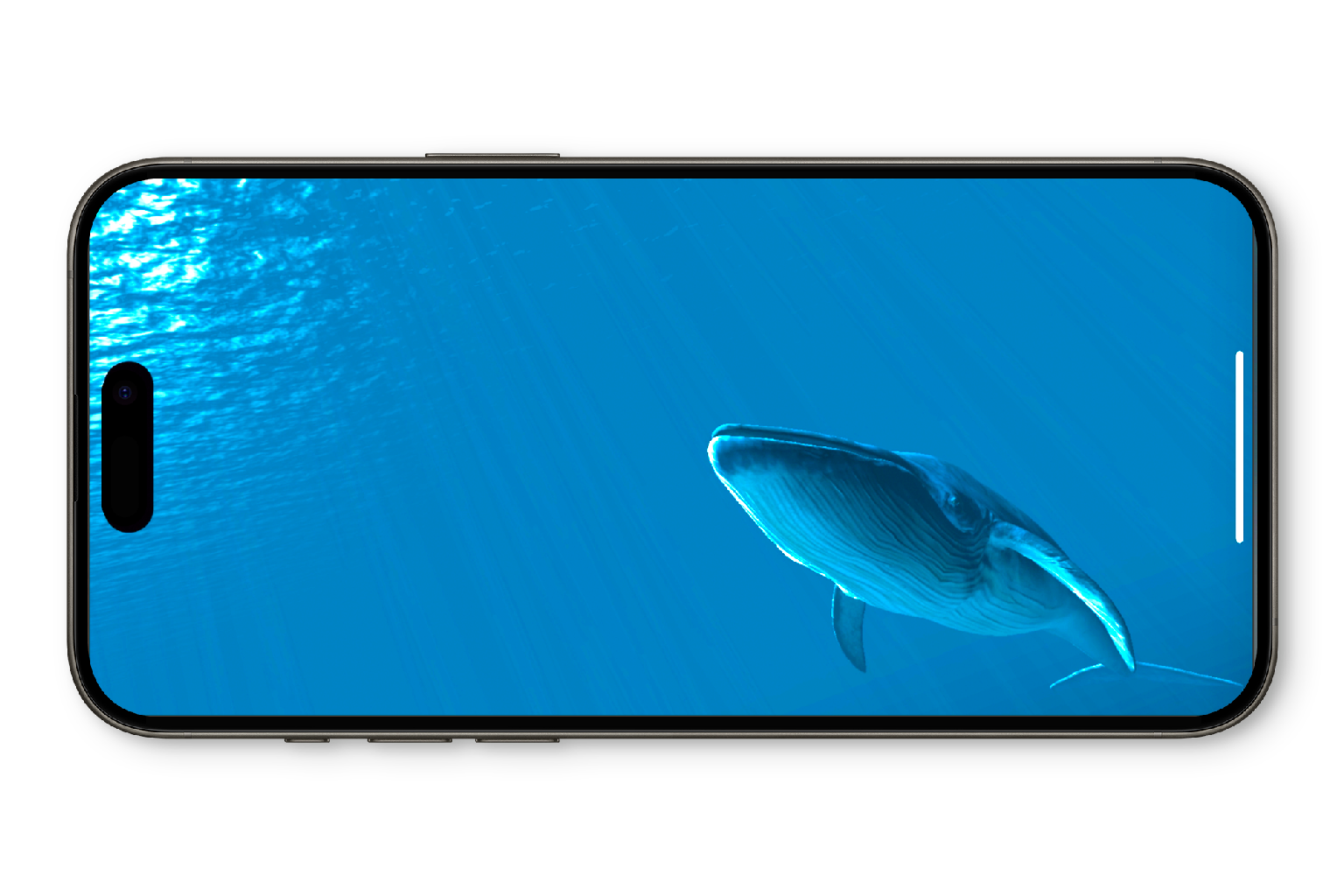
The museum's whale skeleton is enormous. Visitors point their device at the real bones to activate the experience, so the scale is felt before it is explained. The whale swims past, then rolls 180 degrees in the water to face a cloud of krill and feed. Creating hundreds of thousands of individually animated krill with realistic flocking behaviour, and keeping it running on a consumer mobile device, required writing custom simulation scripts from scratch. The sound design leads the experience. We built a full spatial soundscape: the whale approaches from behind, audible before it is visible on screen. Sound as a directional cue, not decoration.
Stegas

Stegotetrabelodon

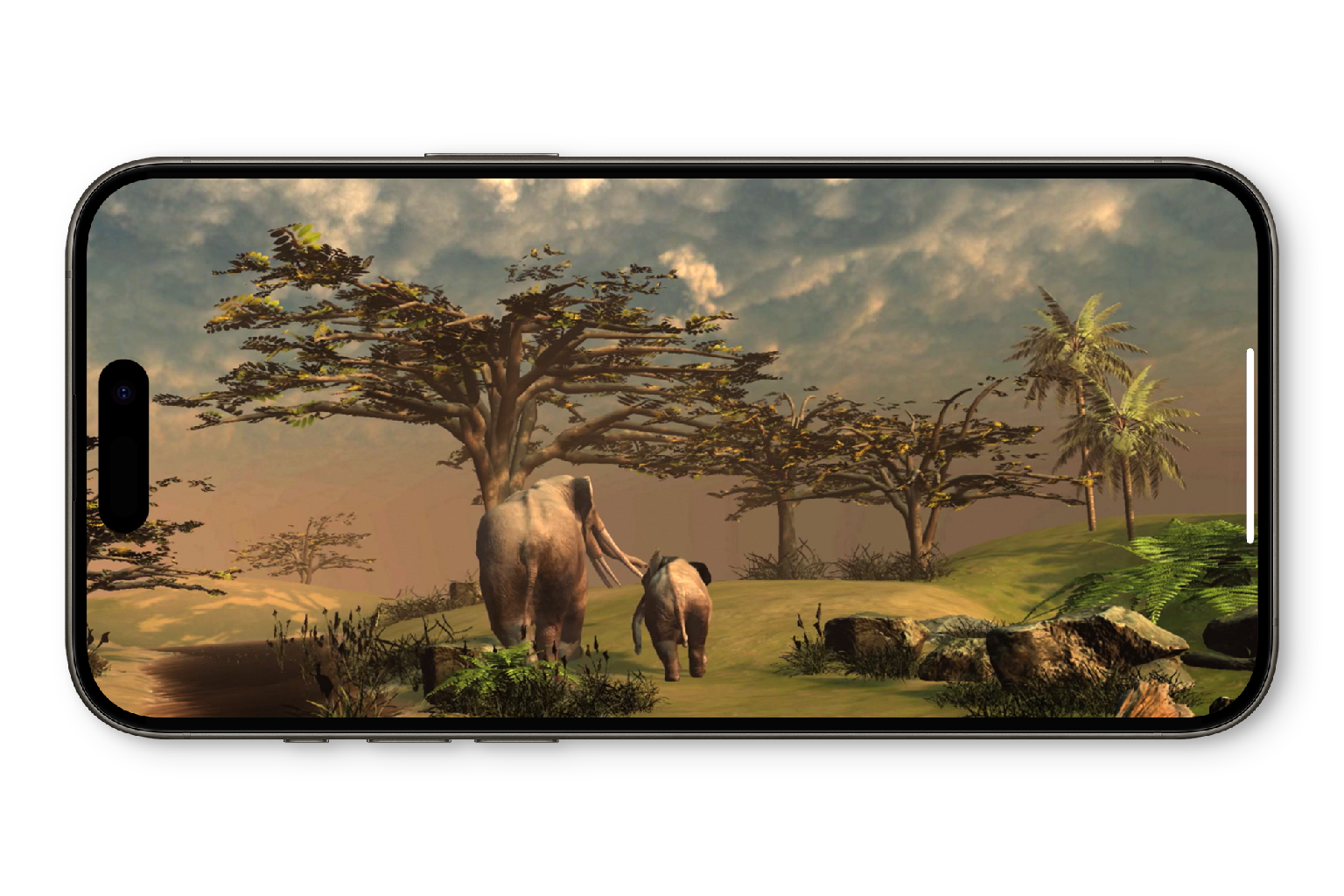
The Stegotetrabelodon is a prehistoric elephant discovered in what is now the UAE, a direct link between the region and deep geological time. When this animal walked here, it was not desert but floodplain: wet, ecologically dense, unrecognisable as the same landscape. We worked with the museum's experts to reconstruct that world accurately, right down to the flora of the era. The characters were built from 3D scans of the physical models in the exhibition, then optimised and rigged for mobile. The scene follows a mother and cub walking along a riverbed. The youngster stops to drink, unaware of a crocodile approaching from the water. The mother notices, moves to confront the threat, and the crocodile retreats. That river is also present in the real exhibition: a glass floor traces the room and corridor, a physical echo of the waterway the animals move beside.

Storyboarding

The craft

Getting fully realised 3D environments to run smoothly on mid-range consumer devices required careful work: balancing geometric complexity, texture resolution, and render performance without losing the photorealism that makes the experiences believable. The environments needed to feel rich. They also needed to run.

We scanned the museum spaces using Immersal while the building was still under construction ,before exhibits were in place, and trained the local team to update and maintain those scans as the installation developed. Getting spatial anchoring right under those conditions required working from architectural drawings and anticipating the finished space rather than scanning what was already there.

Recognition

The NOUS Digital app, including the AR experiences produced by Luzidlab, was awarded Silver in the Mobile App category at the MUSE Creative Awards 2026.

Muse award 26